
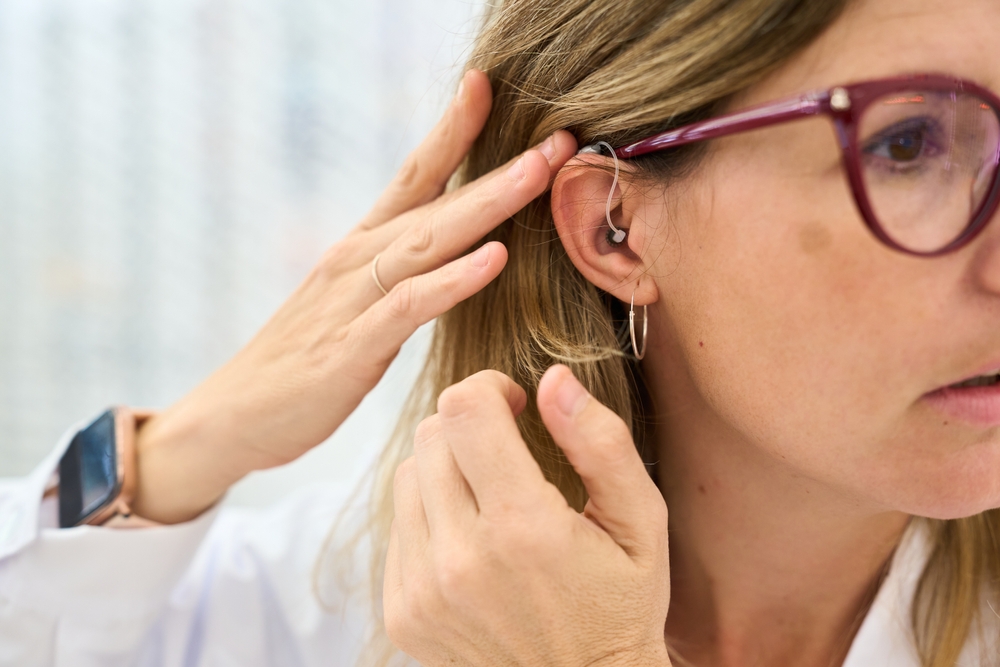
It is incredibly common for individuals to resist getting hearing instruments simply because they dread a bulky appearance or an uncomfortable fit. For decades, legacy acoustic amplifiers were cumbersomely large, highly conspicuous, and culturally tethered to physical senescence. Furthermore, many individuals harbored deep anxieties about social isolation, fearing others would exclude them from discussions based on assumptions of cognitive decline or profound auditory deficits.
Because this archaic mental image endures, thousands remain deeply reluctant to schedule an initial audiometric evaluation. However, contemporary medical engineering has ensured that current hearing solutions look and function in a completely unexpected manner. Advances in design and technology have made them smaller, more comfortable, and far more discreet.
Should your reluctance stem entirely from memories of obsolete, bulky hardware, you owe it to yourself to discover current medical advancements.
Dispelling the Myth: Modern Devices Have Transcended Older Styles
If you close your eyes to conceptualize a hearing system, your mind likely crafts a picture of a prominent, cumbersome unit draped behind the ear. Should that be your current expectation, you are inadvertently recalling the clunky designs common to the 1980s and 1990s.
In the intervening decades, the entire field of otolaryngology and acoustic engineering has undergone a massive paradigm shift. Advances in miniaturization, design, and digital technology have completely reshaped what hearing aids look like today. Today’s instruments are profoundly smaller, remarkably streamlined, and strategically engineered to blend flawlessly into your natural anatomy or vanish altogether.
Numerous modern instruments are inserted completely within the ear canal structure, rendering them undetectable throughout standard daily dialogue. Others rest behind the ear but are so compact and lightweight that they’re easy to overlook, especially when matched to your hair or skin tone.
A Taxonomy of Modern Styles: From Totally Hidden to Ultra-Streamlined
If you’re wondering what your main options in hearing aids actually look like, here’s a simple breakdown:
The Invisible-in-Canal (IIC) Form Factor
This specific configuration offers the highest degree of user discretion. An IIC device is positioned entirely past the second bend of the auditory canal, fabricated from a personalized physical matrix of your unique anatomy. Spoken interactions at arm’s length occur without anyone realizing a medical device is present. They remain an exceptionally sought-after solution for patients with mild-to-moderate deficits who refuse to compromise on cosmetic privacy.
The Versatile Receiver-in-Canal (RIC) / Receiver-in-the-Ear (RITE) Style
This architecture stands as the most frequently prescribed configuration in modern clinical practice. A microscopic electronic hub is positioned behind the outer ear, anchored by an ultra-thin, transparent lead to a high-fidelity speaker seated inside the canal. At a glance, they often resemble wireless earbuds. Unless an individual is specifically searching for the device, it remains completely unnoticed during normal interactions.
Power and Performance: Behind-the-Ear (BTE)
These units reside entirely behind the external ear, providing a slightly larger chassis that is still infinitely more elegant than historical variations. They are typically prescribed to resolve advanced levels of hearing impairment, generating exceptional sound amplification without the cumbersome weight users traditionally dread.
The bottom line is simple: modern assistive hearing systems are crafted to serve your life quietly, not to draw attention to your ears.
How Current Hearing Technology Outperforms Traditional Amplifiers
The evolution of these medical devices encompasses much more than a superficial face-lift. Contemporary devices are essentially miniature smart hubs rather than historical medical hardware. Most current systems boast universal wireless syncing, channeling smartphone calls, high-definition music, and television broadcasts directly to your internal receivers.
Managed via intuitive phone interfaces, these systems give you the power to mix sound levels or change situational profiles without ever touching your ears. Should you transition into a loud social environment, you can instantly recalibrate your directional microphones via your phone screen. Furthermore, lithium-ion rechargeable cells have entirely eliminated the need to fiddle with microscopic, short-lived zinc-air batteries. You merely dock the devices on a nightstand inductive charger, exactly like replenishing your mobile phone.
Empowerment Over Hesitation: Redefining Hearing Health Care
Despite understanding these technological quantum leaps, psychological resistance remains highly common. Initiating an auditory health journey can feel emotionally taxing because it requires acknowledging that our physical baseline has shifted over time. This can make us feel helpless and like we aren’t fully in control of what’s happening to our bodies.
Consider a healthier perspective: wearing a contemporary hearing system does not mean your body has failed you. They are simply tools for managing standard lifecycle changes, which are a normal part of the human experience. They’re proof that you’re taking action to support and equip your body in essential ways.
Imagine wearing a discreet, barely (if at all) visible device and finally being able to follow along in conversation, hear better in crowds, and focus on the things that really interest you. That level of sensory restoration is incredibly liberating!
Experience Contemporary Hearing Technology Firsthand
To dismantle old assumptions, the best strategy is to witness these design breakthroughs with your own eyes. Our clinical team cordially invites you to visit our facility, interview our staff, and evaluate different form factors in a stress-free, zero-obligation environment. View this consultation simply as a tactile opportunity to discover just how radically changed this technology has truly become.
Almost every visitor walks out completely shocked by how weightless, ergonomic, and cosmetically invisible these tools are in practice! Please contact our patient care coordinators or utilize our digital portal to secure your consultation this week.